
Mobile solutions help businesses effectively connect to their customers and provide them with a seamless user experience. However, the cost of making an app can be a significant factor that companies must consider before embarking on this journey. You should know what influences its price, for instance, app complexity, chosen platform, team size, and maintenance fees.
This article will provide an overview of the expenses involved in the app development, launch, ongoing maintenance, and marketing in the UK market. Also, you’ll learn different options to build a mobile app and understand how to form a budget and whom to contact for proper calculation and development.
We created this guide based on our fruitful experience creating high-quality native and cross-platform solutions. Stay tuned to learn about app development costs and explore our AI-powered healthcare, insurance, and equine state management solutions.



- Get a free quote for your app
- What Determines App Development Costs?
- Complexity
- Platforms
- Team
- Maintenance
- How Application Scale Influences Development Costs
- App Development Options
- Develop an app yourself
- Hire a freelancer
- Partner with a development company
- Customize an app template
- Build with a constructor
- Approximate App Developers Cost in the UK
- Junior developers
- Mid-level developers
- Senior developers
- App Marketing Costs
- App store optimization (ASO)
- App install campaigns
- Influencer marketing
- Public relations (PR)
- Retargeting
- Ongoing Costs of App Maintenance
- Server hosting costs
- Development costs
- Content and data costs
- Third-party services costs
- Security and compliance costs
- Customer support costs
- Costs of Publishing an App on the App Store and Google Play Store
- Developer account
- In-App purchases and subscriptions
- How To Decrease Your App Development Cost
- How to Choose an App Development Company
- Experience
- Expertise
- Cooperation model
- Communication
- Security
- Support and maintenance
- Price
- Consider Inoxoft’s Team of Experts to Build Your Application
- Equine Registration Platform for Tracking Racehorses’ Welfare
- Voice-Powered Web and Mobile Cloud-Based Solution for AI System
- Round-the-Clock Insurance Agent
- Final Thoughts


What Determines App Development Costs?
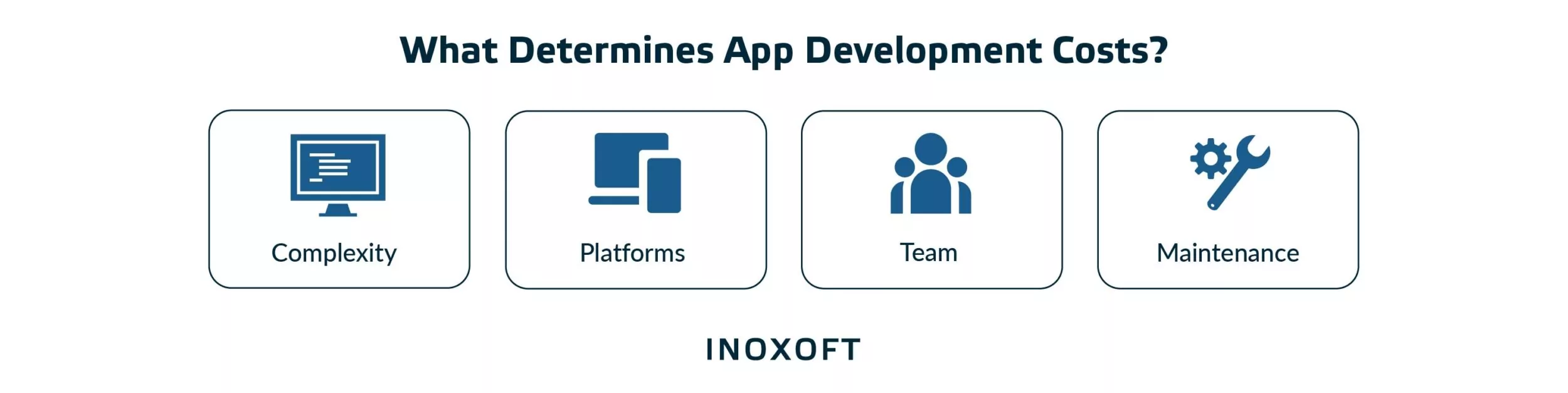
The overall app creation cost mainly hinges on the software goal and the time required to code it. In fact, plenty of factors influence how much you need to spend on development. Here are some of them:
Complexity
The more complex app you want to create, the higher its development cost. Ensure the quality of the interactive and advanced features to excel the product’s performance. Decide if you need an application programming interface (API) to integrate with other services or a content management system (CMS).
Platforms
The number of platforms to place the app on impacts the total cost. For instance, native app development for a single operating system (OS) will be cheaper than a cross-platform one. Nevertheless, it’ll be unprofitable. If you choose Android app development, you lose potential iOS device users. And vice versa.
Team
The more, the merrier! And also more costly. The main factors that define the price are skills and experience. Junior, middle, and senior developers will ask for different fees. Keep in mind that the amount of people involved in the application development and their experience influences the quality of the final product and the date of its release.
Maintenance
Post-release development is as crucial as the pre-launching one. You must ensure the application works smoothly without glitches, crashes, or other issues. The total price of building an app worldwide, including the United Kingdom, already includes the mobile app maintenance cost. The support lasts for a specific time after launch, an average of 6 months.
How Application Scale Influences Development Costs
App scalability means its potential to handle many users and effectively maintain interactions with them. Users want an impeccably working solution that works without problems. The scale of the application deals with its database, back-end, and servers — the wider your target audience is, the more scalable your platform has to be. And the absence of adequate scalability might cost you the entire reputation of your business.
The complex multifunctional application related to social media, entertainment, or news could cost over £100,000. Developing a niche and simple app in the UK with minimal features might cost less than £20,000. Next, we’ll show examples of different platforms and their average prices.
A good old social media application for sharing media, kind of like Instagram or Facebook, doesn’t sound like a wild challenge. Yet, it’s essential to consider all the functionalities you want to add that would make it valuable and innovative. The cost of app development in the UK starts at £40,000 and might reach up to £300,000.
To create something like TikTok, be ready to spend a fortune on obtaining music licenses and integrating numerous services and features for more engagement — app cost for this creation cost in the UK starts at £130,000.
How about an on-demand app like Uber or Uber Eats? Those require the creation of separate modules for restaurants, clients, drivers, and managers. The total cost of creating an app in the UK might vary from £65,000 to £400,000.
Let’s overview an online dating app: rather than a niche platform, an application like Tinder won’t require more than previously listed. The approximate cost of its development is between £20,000 and £50,000.
App Development Options
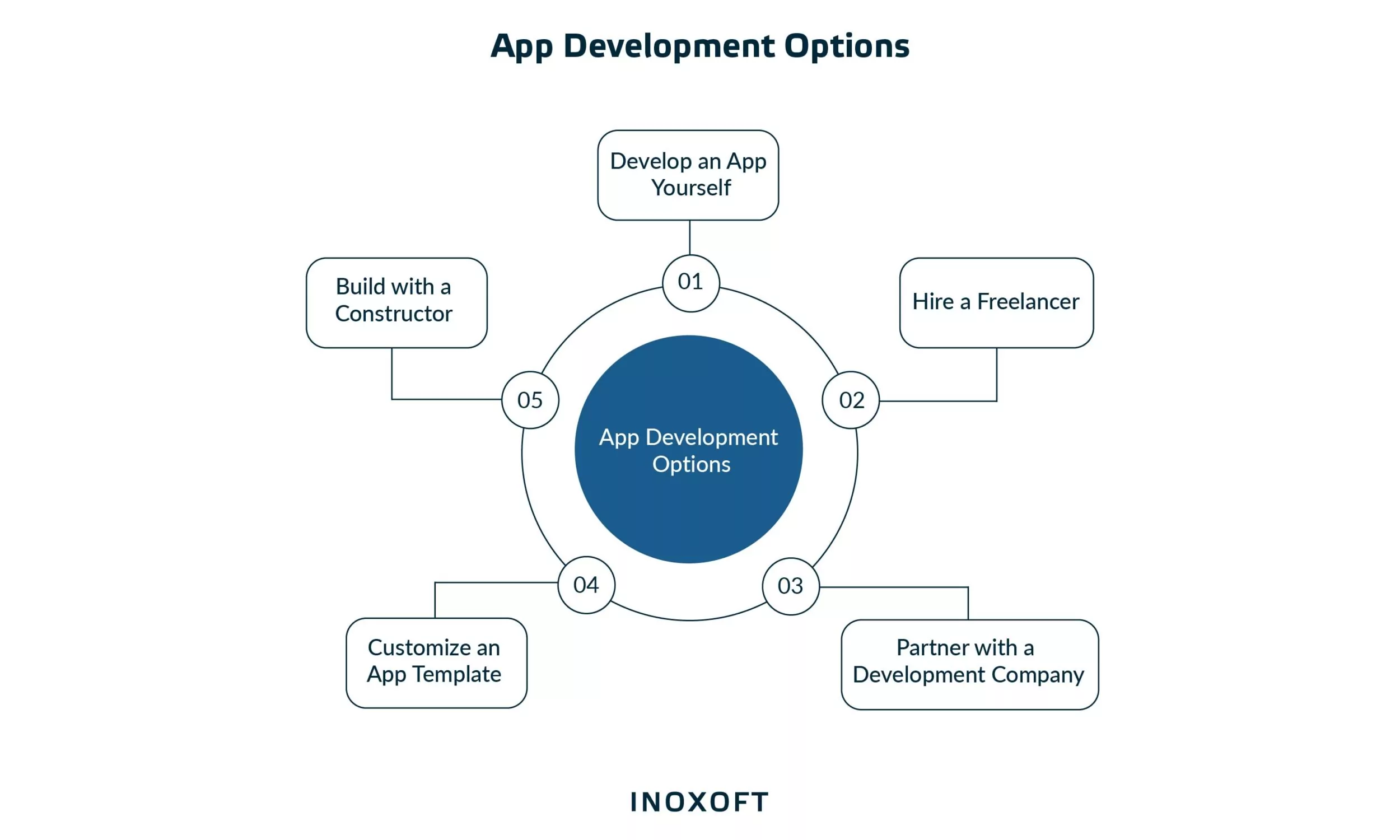
There are five common ways to create an application:
Develop an app yourself
Developing an app on your own requires significant technical skill and expertise.
You can create an app from scratch if you are well-versed in programming languages, front-end and back-end frameworks, databases, cloud solutions, etc. However, if you are not an experienced app developer, you will likely need to invest considerable time and effort to learn the necessary skills.
Additionally, it can be risky, as you may encounter issues and errors that require professional assistance. If you are considering developing an app independently, assess your technical abilities and determine whether it is viable.
There are numerous free resources to learn how to develop apps. For example, Codecademy, Udacity, Coursera, edX, YouTube channels (The Net Ninja, CodeWithChris), Apple Developer Documentation, Android Developer Documentation, and others.
Hire a freelancer
Hiring a freelancer can be an attractive option for small businesses and startups. It allows you to develop an app without committing to the overhead of hiring a full-time employee.
Freelancers offer flexible schedules and can work remotely, but you should verify their credentials and experience. Look for specialists with a proven track record of building high-quality apps, and don’t forget to learn reviews and ratings from past clients.
Freelancers may provide guidance and support throughout the development process, making it easier to navigate potential roadblocks.
There are many platforms where you can find freelancers for app creation. The most popular options include Upwork, Freelancer, Fiverr, Toptal, and Guru.
Partner with a development company
Hiring a software development company can be a reliable and efficient way to create a cutting-edge app. Vendors employ teams of experienced coders and designers working together due to a well-organized workflow and security standards.
Additionally, IT companies typically have access to the latest tools, ensuring your app will use the most advanced technology stack.
When selecting an app development company, check its reputation and read testimonials. Look for a company with an experience similar to your specific needs and schedule an initial consultation to discuss your project requirements.
Inoxoft is a software creation vendor trusted by startups and Fortune 500 companies. Learn more about our iOS and Android and app development solutions.
Customize an app template
Buying a pre-designed app template is another cost-effective option. They are often available online and can be customized to suit your specific needs.
However, you should understand that buying a template may result in a less unique or customized app, as your competitors can also use the same example. Additionally, customizing may be challenging and time-consuming if you are unfamiliar with app development.
You can use these resources for purchasing pre-designed app templates: CodeCanyon, TemplateMonster, Instamobile, Sketch App Sources, and Codester.
Build with a constructor
App builder products are designed to simplify the development process for non-technical users. These products often offer drag-and-drop interfaces and pre-built components. This way, you can easily create a basic app without any coding knowledge.
However, app builders may be limited in customization and functionality and unsuitable for complex or sophisticated solutions. If you consider using this option, carefully evaluate your needs and ensure that the product you choose is capable of meeting them.
Examples of app builder platforms include AppyPie, BuildFire, Bubble, Zoho Creator, AppSheet, and others.
Approximate App Developers Cost in the UK
How much does it cost to make an app in the UK? The development team is pivotal in the total sum you invest in the project. And much depends on the specialists’ experience:
|
Complexity |
Simple App [by junior developer] |
Moderate App [by mid-level developers] |
Advanced App [by senior developers] |
|
Cost |
£10,000 – £50,000 |
£50,000 – £200,000 |
£200,000+ |
|
Descriptions |
Basic features like notifications, database integration, user login, etc. |
Customized UI/UX features |
Advanced functionalities |
|
Standard Ul elements |
Back-end support |
Custom UI/UX design & advanced animations |
|
|
Simple backend support |
API integration |
Complete back-end support |
|
|
Built-in payment gateway |
High-security maintenance |
Junior developers
Industry newbies, aka junior developers, with a year of experience as a maximum, is one of the first options. They are no strangers to Javascript and frameworks like React, Vue, Angular, or Svelte. Also, juniors can develop back-end development using Javascript/Java/Typescript/C# and might even know the Agile methodologies.
The cost to build an app in the UK with the help of junior developers is up to £35,000 per year.
Mid-level developers
Mid-level specialists cover a more comprehensive range of skills. They have experience developing applications for different operating systems and working with cross-platform technologies. Mid-level developers build, test, release and deploy apps on the market. With up to 4 years of experience, they know how to develop cloud-native solutions and work with databases like MongoDB, MySQL, PostgreSQL, etc.
As a result, creating a moderate app with mid-level developers will cost you £50,000 per year.
Senior developers
As great old-timers, senior developers know what they do. By choosing them, you get a strategic plan for the development process. Seniors will provide you with bespoke app design and codebase and excellent problem-solving skills. They know how to work with cloud services like AWS, GCP, and Microsoft Azure.
As a bonus, seniors can lead the dev team and provide exceptional final product quality. To build a complex app with advanced functionality, you’ll need a minimum of £200,000.
App Marketing Costs
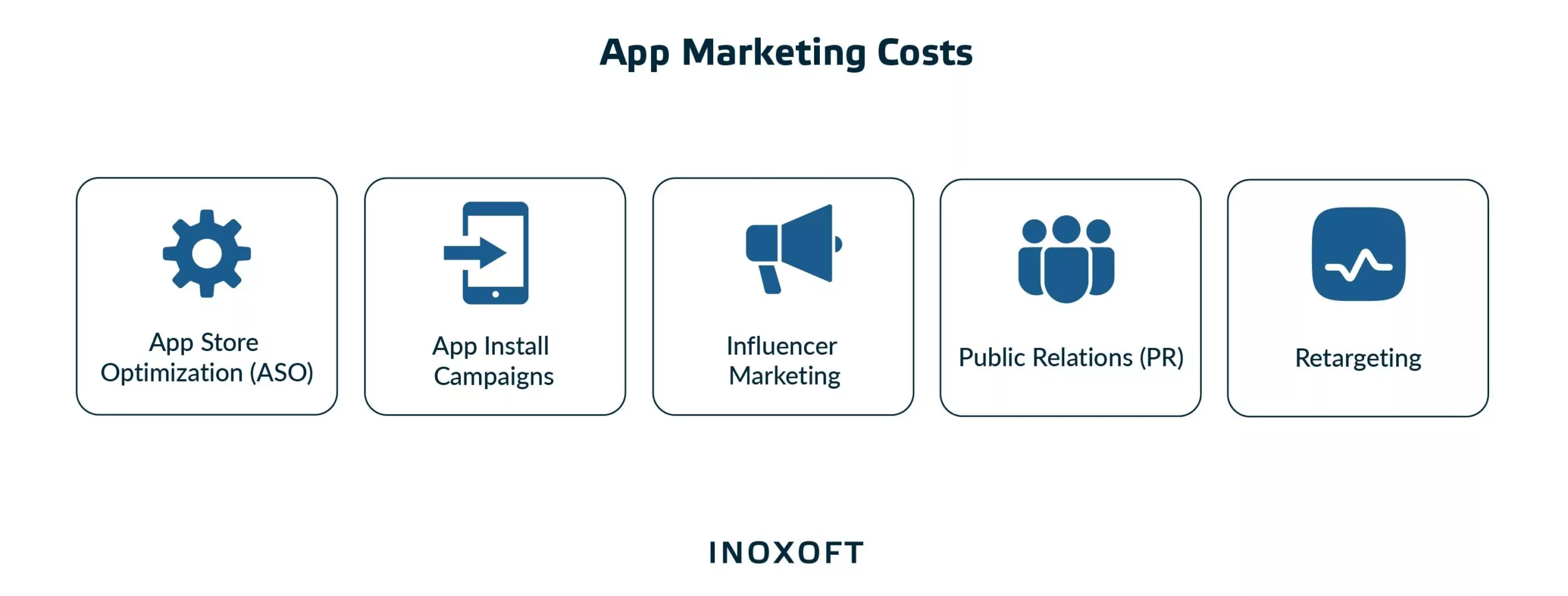
The cost of marketing an app can vary widely depending on several factors, such as the size and scope of your marketing campaign, the target audience, and the app’s niche. The essential costs include the following:
App store optimization (ASO)
ASO involves optimizing your app’s metadata, such as its title, description, and keywords, to improve its visibility in app store search results. It is typically a one-time cost that depends on the complexity of your app and the level of optimization required.
App install campaigns
App install campaigns focus on driving installs. They include ads on social media platforms, mobile ad networks, and other channels. The amount charged varies with the platform, targeting options, and the competition level in your niche.
Influencer marketing
Influencer marketing means partnering with social media influencers or other content creators to promote your app to their followers. It can effectively reach a highly targeted audience, and its price varies due to the influencer’s reach and engagement.
Public relations (PR)
PR is about building relationships with journalists, bloggers, and other media outlets to generate buzz and credibility for your app. However, it requires a significant investment of time and resources.
Retargeting
Retargeting covers showing ads to users who have already downloaded or interacted with your app. This way, you can re-engage users and encourage them to use it more frequently.
Here’s a table that summarizes the approximate cost ranges for each of the app marketing strategies:
|
Marketing Strategy |
Approximate Cost Range |
|
App Store Optimization (ASO) |
£500 – £5,000 |
|
App Install Campaigns |
£0.50 – £5 per install |
|
Influencer Marketing |
£500 – £10,000 per campaign |
|
Public Relations (PR) |
£1,000 – £10,000 per month |
| Retargeting |
£0.20 – £1 per click |
We used data from sources such as Business of Apps, Mobile App Daily, and others.
Ongoing Costs of App Maintenance
The ongoing costs for maintaining an app can vary depending on the app type and features, the development team size, and the infrastructure it runs on. They include the following.
Server hosting costs
The cost of hosting the app on a server is determined by the hosting provider, the server type, and the app size. Cloud-based hosting options like Amazon Web Services (AWS), Google Cloud Platform, and Microsoft Azure offer scalable solutions that can grow with the app’s usage.
Development costs
Even after launch, an app may require regular updates and bug fixes from experienced developers. You should have a maintenance plan to ensure your software is up-to-date and functioning correctly.
Content and data costs
Some apps require regular updates to their content, including product listings, pricing information, or user data changes. So, you will need ongoing expenses, such as paying for access to data feeds or hiring a team to manage content.
Third-party services costs
Many apps rely on third-party services for features like push notifications, in-app messaging, and analytics. They may demand continuous subscription or usage-based fees, which can increase over time.
Security and compliance costs
As the app evolves, it should meet new security and compliance standards. It includes regular security audits, compliance reviews, and regular monitoring of user data.
Customer support costs
Providing ongoing customer support can be costly, especially if the app has a large user base. Remember about maintaining a help desk, providing live chat support, or offering phone support.
We prepared a table with estimated average costs for maintaining an app, broken down by category:
|
Category |
Estimated Average Cost (per year) |
| Server Hosting Costs |
£2,000 – £5,000 |
|
Development Costs |
£10,000 – £50,000 |
|
Content and Data Costs |
£1,000 – £5,000 |
|
Third-Party Services Costs |
£5,000 – £10,000 |
|
Security and Compliance Costs |
£2,000 – £5,000 |
|
Customer Support Costs |
£1,000 – £5,000 |
Costs of Publishing an App on the App Store and Google Play Store
Publishing an app on the App Store and Google Play Store involves certain costs that developers should be aware of:
Developer account
Both platforms require developers to have an account to publish an app. There is a one-time registration fee for Google Play Store and an annual fee for App Store.
In-App purchases and subscriptions
In-app purchases and subscriptions on the App Store and Google Play Store generate revenue, but the platforms also charge a commission fee for these transactions. You should consider these expenses when setting the prices to guarantee app profitability.
And here are the fees for App Store and Google Play Store:
|
Cost Item |
App Store |
Google Play Store |
|
Developer Account |
£79 per year |
£20 one-time fee |
|
In-App Purchases and Subscriptions |
30% share if you make over $1M (£720,000) in annual net app revenue. 15% share if: 1. You make less than $1M (£720,000) in annual app revenue; 2. You’re after 12 months of service in the App Store with a subscription-based app. |
15% for the first $1M (£720,000) of earnings you make each year. Once the total earnings exceed $1M (£720,000), the service fee is 30% for the rest of the year. |
How To Decrease Your App Development Cost
A meticulous focus on managing development costs is essential to ensure a viable and sustainable journey beyond conceiving groundbreaking ideas. If you are worried the cost of building your application might turn out to be a fortune, consider the following key strategies to navigate the delicate balance between price and quality:
- Precise scope definition: Detailing your app’s features, functionalities, and design requirements from the outset can prevent scope creep, which can help you stay within your app development budget while delivering a high-quality product.
- Agile methodology: Embracing those methodologies, you will promote incremental development, constant feedback loops, and regular iterations to reduce the risk of costly deviations from the project’s original goals.
- Cloud solutions: Cloud solutions offer scalability and cost flexibility, allowing you to match your expenses with your actual usage and avoid upfront infrastructure costs.
- Component reuse: Leverage existing libraries, frameworks, and open-source solutions whenever possible, after ensuring that the components align with your project’s requirements.
- Thorough testing: Detecting and resolving issues early minimizes the likelihood of costly bug fixes after the app’s launch, saving both time and resources.
- Outsourcing advantage: By delegating non-core tasks to specialized external teams, you can capitalize on their expertise while reducing the overhead costs associated with hiring full-time employees for these roles.
How to Choose an App Development Company
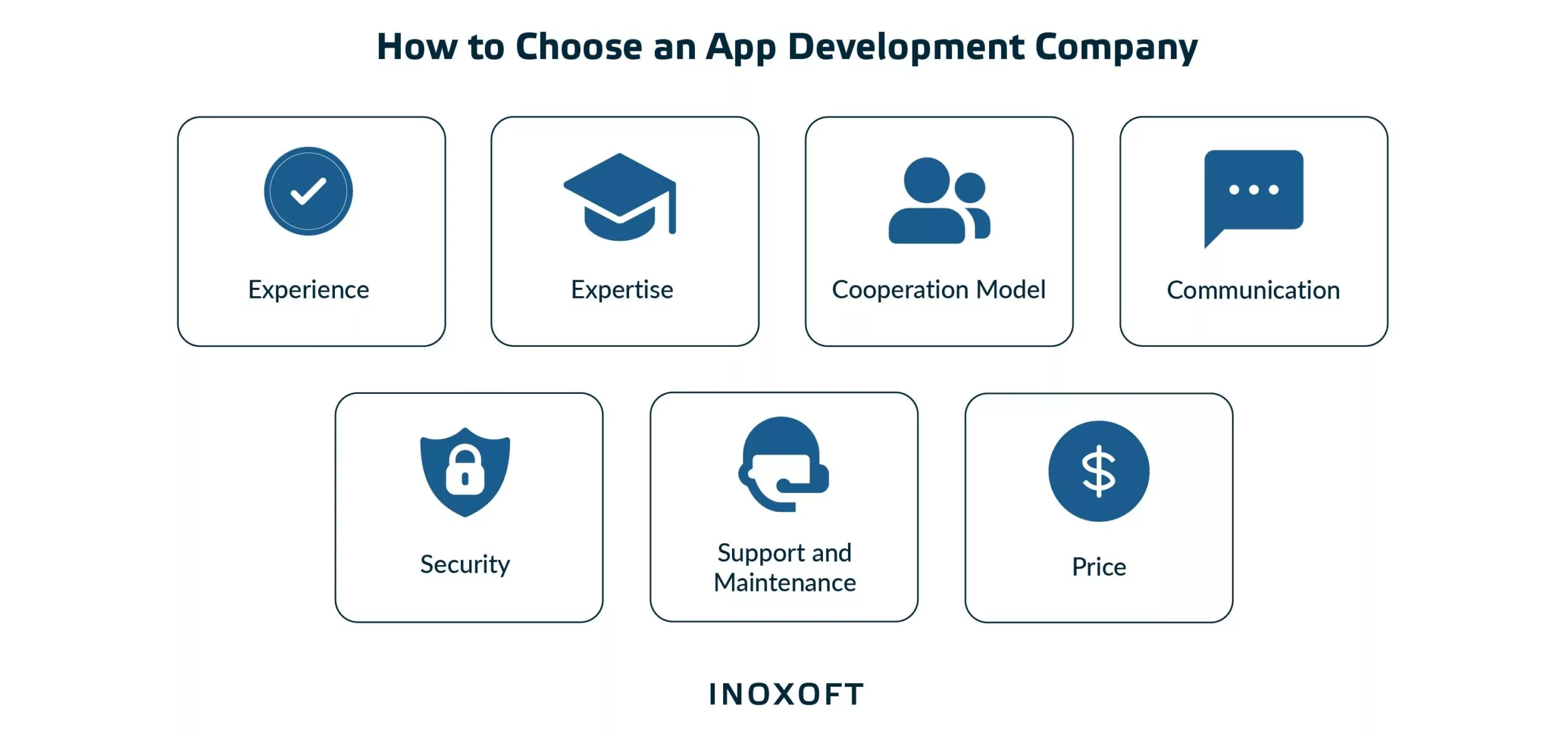
Choosing an app development company is an important decision that can significantly impact your success. Here are some factors to consider:
Experience
Check the company’s portfolio to see the types of apps they have already created. Ensure developers have experience working in your industry and understand its unique challenges and requirements.
Expertise
Ask if the company has expertise in the specific technology stack required to develop your app. For example, this is what Inoxoft uses to create mobile apps:
- Cloud Infrastructure: AWS, Azure, Google Cloud
- Programming languages: Java, Kotlin (Android), Swift, Objective-C (iOS), Python
- Backend frameworks: Node.js, Ruby on Rails, .NET, Django
- Front-end frameworks: React Native, Flutter, HTML, CSS, JavaScript
Cooperation model
Experienced vendors can offer you several models of cooperation. For example, with Inoxoft, you can create applications using:
- Remote developers — a flexible option where you pay for the time and materials and can change or add requirements
- Dedicated team — a solution with a monthly salary where developers work on the whole project from start to finish
- Extended team — a staff augmentation service with a fixed price defined by the contract before the start of cooperation
If you are not sure which model is suitable for your specific needs, please contact our team.
Communication
Communication is critical for successful app development. Pay attention to the company’s availability, response time, project status updates, progress reports, and honesty about any issues or challenges.
Security
Ensure the development vendor you choose has expertise in building secure apps. The company should use encryption, secure data storage, and communication protocols and comply with GDPR, HIPAA, and PCI-DSS regulations.
Support and maintenance
Ask the company about their post-development support and maintenance services to keep your app up-to-date and stable functioning.
Price
Price is essential but not the only factor. Be cautious of companies that offer low amounts, as they may sacrifice quality or cut corners to reduce costs. Look for a vendor that offers a fair budget that aligns with the value they provide.
Consider Inoxoft’s Team of Experts to Build Your Application
Inoxoft is an IT company that offers mobile app development services. Our certified engineers guarantee bug-free code and fast performance and consider all your specific requirements.
We create mobile software using an advanced technology stack, intuitive UI/UX design, and new features. For example, we implement AI/ML solutions based on big data analytics. Also, our apps include payment, scheduling, chatting, media uploading, geolocation, notifications, etc. Inoxoft’s portfolio covers dozens of mobile applications for healthcare, real estate, education, fintech, logistics, and other industries. And here are some of our latest projects:
Equine Registration Platform for Tracking Racehorses’ Welfare
Our client faced the problem of poor equine state management. The idea was to create an application allowing all parties to record and access information about racehorses’ health and training.
We have developed a solution supporting seven user roles, including equine owners, trainers, veterinarians, etc. It allowed them to add important information, download media files, view the activity calendar, and leave comments on the animal’s profile. And the owner got the ability to hire professional horse care providers and pay for the services directly in the app.
The solution helped make racehorse management transparent, improve animal welfare, and connect owners with service providers.
Voice-Powered Web and Mobile Cloud-Based Solution for AI System
Beyond Verbal Company is a startup that recognizes emotions and diseases using voice intonations. With a health and emotion monitoring algorithm, the company needed a platform to collect patient data and create a voice database. The ultimate goal was to improve AI predictions for the diagnosis of cardiovascular diseases.
While developing a web platform for doctors and a mobile application for patients, we faced some challenges. The interface had to be equally convenient for all types of users, and the solution itself had to increase the accuracy of voice analysis and comply with HIPAA regulations.
As a result, we have created a secure and intuitive cloud solution. It allowed doctors to manage patients, launch surveys and work with recordings, increasing the accuracy of voice analysis and the diagnosis relevance.
Round-the-Clock Insurance Agent
We were approached by a company dealing with employee health insurance. They needed a solution that would allow each insured employee of the enterprise to be informed about the service’s details. It was essential to provide instant access to a personal insurance plan with a quick search for the necessary data.
As a result, we created an application, allowing each employee to view personal health insurance conditions, limits, and lists of hospitals and specialists. Users can also quickly contact an insurance agent for additional information.
Final Thoughts
The cost of developing a mobile application is influenced by many factors, including its complexity, platform, team size, and experience level. Also, you should consider the launch expenses on the App Store or Google Play Store, maintenance costs, and marketing fees.
By cooperating with an experienced vendor, you can optimize project prices and avoid making expensive mistakes. Contact us to discuss the budget and timing of your idea, as the exact app development cost in the UK can only be determined considering the project specifics.
Frequently Asked Questions
What is the average app creation cost?
The simple app with basic features (like login, database, and notifications) and simple UI/UX will cost you £10,000-£50,000. The moderate app with customized UI/UX, API integration, and payment gateway could cost £50,000-£200,000. And for an app with advanced functionalities, custom UI/UX, and high-security maintenance, you should pay more than £200,000.
Contact Inoxoft to get a detailed budget for your project.
What are the options of app developers in the UK?
As in every country, in the UK, you can hire developers based on their experience:
- Junior developers (0-1 year of experience) — £30,629/year
- Mid-level developers (2-4 years of experience) — £42,413/year
- Senior developers (4-7 years of experience) — £64,644/year
What are the advanced custom app development costs in the UK?
The advanced application development starts with a price of £200,000. You’ll get a complex mobile solution with sophisticated functionalities, custom UI/UX design, and security maintenance. Also, an IT vendor will provide you with complete back-end support.
The total sum is determined by app complexity, team size, chosen platform, timelines, and other factors. Contact us to get an approximate budget calculation for your project.
What can you do to reduce the cost of application development?
- Define precise scope of the project
- Embrace Agile methodology
- Choose cloud solutions
- Reuse components
- Assure product quality
- Outsource your dream team
How to estimate my app development cost?
The overall app creation cost mainly hinges on the software goal and the time required to code it. Many factors influence how much you need to spend on development, including app complexity, platforms, team capacity and post-launch expenses.
Use our app cost calculator to see your potential expenses.