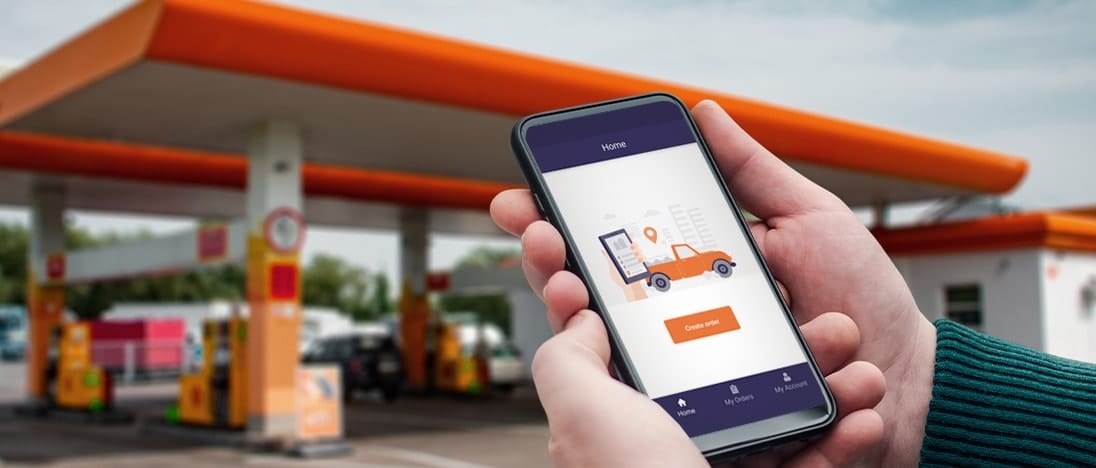

As the number of cars on our streets continues to rise, the demand for fuel delivery services is still high. If you’re on the lookout for a compelling idea for your next app, this could be the perfect opportunity, especially since it’s a hot topic in online discussions.


To illustrate just how promising the fuel delivery market is, consider this: by 2033, it’s projected to grow by over 7%, surpassing a staggering $10 billion. With such potential, it’s clear that there’s a significant opportunity waiting to be tapped.


But as you ponder this idea, you might wonder: how much investment is needed to bring a fuel delivery mobile app to life? We’ve been down this road before, having developed such a solution for our American client. To make it easier for you to assess the cost of developing a fuel delivery app, we’ve compiled our insights and experience into a comprehensive guide detailing everything you need to consider for your project.

Contents

Key Takeaways

  • Basic fuel delivery apps cost between $25,000 and $80,000, while advanced solutions with complex features can range from $130,000 to $200,000;
  • Developing the full feature set requires around 870 hours and costs approximately $30,100, covering customer, driver, and admin panels;
  • UI/UX design can add up to $11,500, depending on how many screens and interactive elements are required;
  • Major cost drivers include feature complexity, third-party integrations (like maps and payments), and security requirements;
  • Platform choice impacts pricing: cross-platform apps are more budget-friendly, while native apps offer better performance at a higher cost;
  • Development location matters because hourly rates vary: Asia ($20–30), Eastern Europe ($30–40), Latin America ($40–60);
  • Ongoing maintenance may cost up to $6,000/month, covering bug fixes, updates, performance optimization, and customer support.

What are the Benefits of Building a Fuel Delivery App for Your Business?

The necessity of on-demand applications in modern business is hard to overestimate. Moreover, it’s one of the primary keys for staying relevant for startups, enterprises and corporations. Customers would most certainly appreciate a straightforward and organized application to help them request services and satisfy their needs without extra effort. Despite this eternal love from users, what other advantages does a fuel delivery business get after creating an app? Let’s review.

Reduced expenses

With the help of the scalable application, fuel delivery entrepreneurs can build their empires without building actual fuel stations. Indeed, the maintenance and management of physical locations would require extra resources, like time, costs, ground areas and workforce. Since the investment in app creation will cost less than the previous option, a business can save a good amount of money.

Extended customer base

With urbanization, increased employment, and the rise of digital payments, fuel delivery apps are especially popular in developed countries, where consumer spending power is high.

“In markets like the U.S., China, and Australia, these services are in particularly high demand,” says Nazar Kvartalnyi. “While it may seem like the competition is intense, finding your own approach is key. For instance, you can analyze which areas other companies deliver to, who their clients are, and what specific services they offer. This way, you can discover opportunities to differentiate yourself and succeed.”

Competitive advantage

Oil and gas companies can foster stronger customer relationships and increase retention by integrating features like loyalty programs and personalized offers into the mobile fuel delivery app solution. These apps allow businesses to provide tailored promotions, discounts, or rewards to loyal customers, enhancing their overall service offering and building long-term customer loyalty. 

Not only does this add value to their core services, but it also positions the company as a modern, customer-focused provider in the fuel industry. With these added features, businesses can stand out while offering a seamless, user-friendly experience.

Understanding the Fuel Delivery App Development Costs

To provide an accurate estimate for the cost of developing a fuel delivery app, we offer free consultations to discuss the project. The final price depends on variables like the features you want to include, the technologies used, how quickly you need to launch your product, and so on. All of this is decided on an individual basis.

However, to make things easier, we can provide approximate estimates for both simple and complex applications.

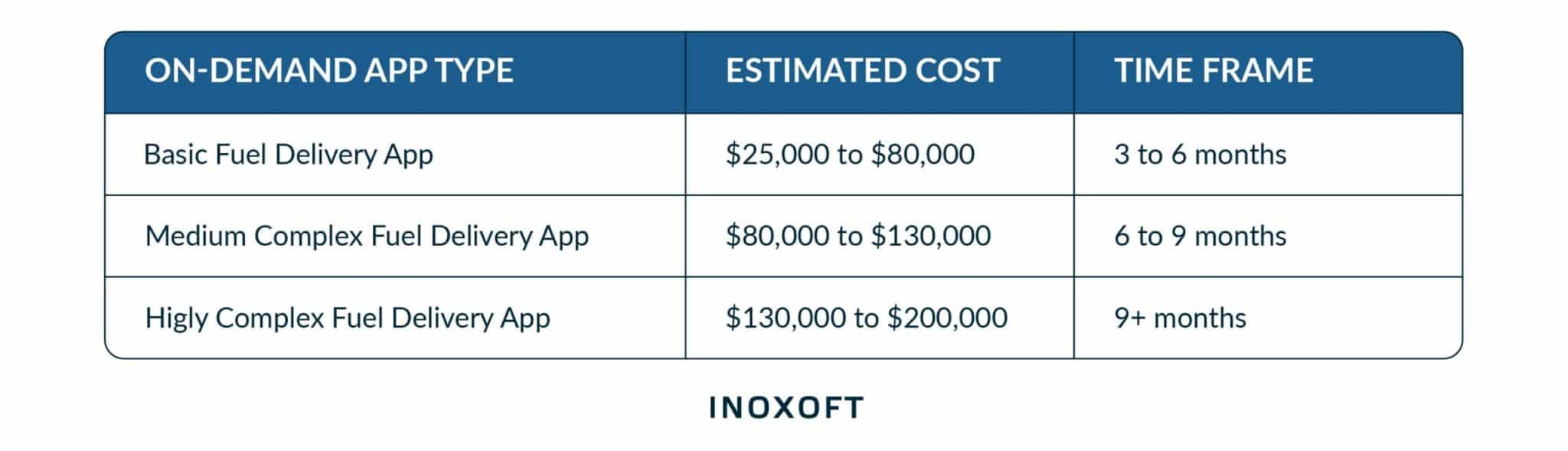
  • Basic App. Offers essential features like user registration, fuel ordering, and payment options. Estimated cost: $25,000 – $80,000.
  • Mid-Level App. Includes API integration, various payment options, customized UI/UX, and real-time chat. Estimated cost: $80,000 – $130,000.
  • Advanced App. Equipped with advanced features like multimedia processing, complex backend, and custom animations. Estimated cost: $130,000 – $200,000.

Fuel Delivery App Development Costs

Must-Have Features of Building a Fuel Delivery App

Like any other application, the total fuel delivery app development cost enormously depends on the specific feature choice. In our case, there should be three different panels of the same application: customer, driver and admin. Now, let’s review the major features of each:

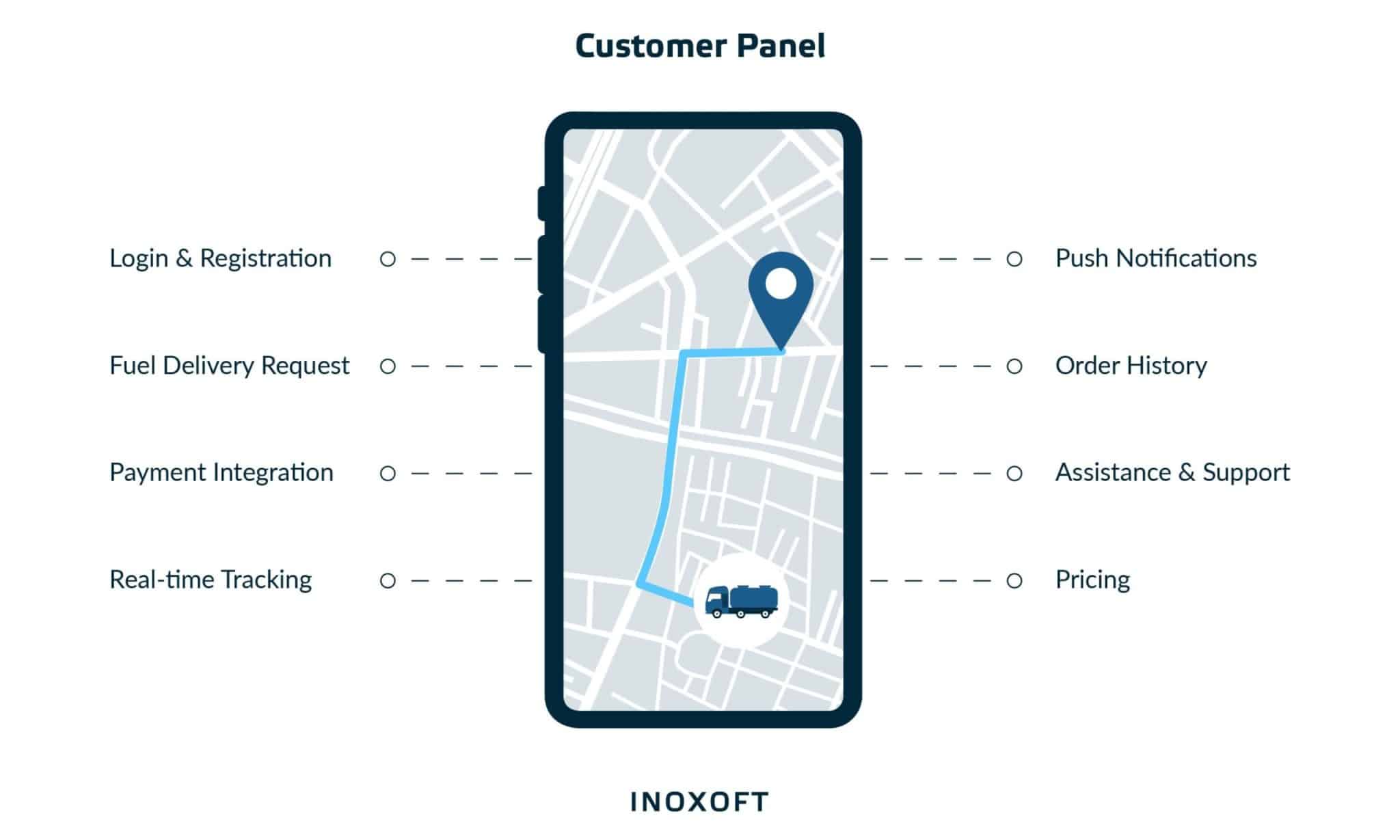
Customer panel

To ensure a user-friendly experience, the customer panel should be straightforward, easy to navigate, and personalized. Key features include:

  • Personal profile creation. Users can create and manage their profiles with all necessary information.
  • Location selection and search. Customers can easily search for and select specific locations for fuel delivery.
  • Order placement. Users can place orders based on fuel type and quantity, with the price displayed beforehand.
  • Secure payment options. Provide multiple payment methods, including card and cash.
  • Real-time tracking. Customers can track the delivery with estimated arrival times.
  • Push notifications. Updates and changes related to the order are delivered in real time.
  • Order history. Users can view and repeat previous fuel delivery orders.
  • Support features. Offer customer support to assist with any issues related to orders or services.

Features of  Fuel Delivery App

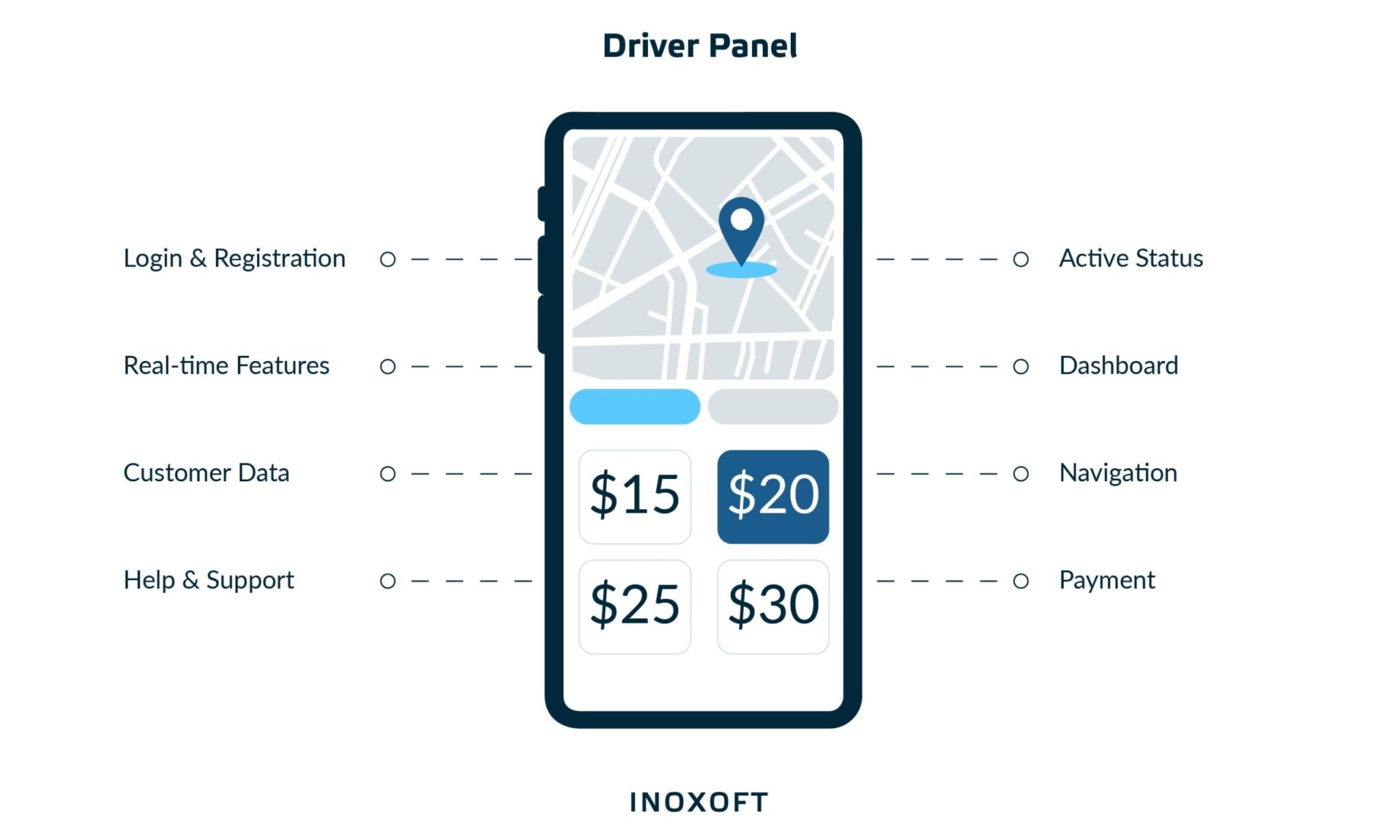
Driver panel

The driver panel should offer seamless functionality to help drivers manage their tasks efficiently. Key features include:

  • Driver registration. Drivers can register and upload necessary documentation.
  • Availability status. Drivers can set their working mode by selecting availability.
  • Order management dashboard. Allows drivers to manage completed, ongoing, and planned orders.
  • Real-time request management. Drivers can accept, reject, and track orders in real time.
  • User information access. Drivers can view customer details, such as location and contact information, to facilitate smooth communication.
  • Optimized route navigation. The app suggests the most efficient route for fuel delivery.
  • Payment features. Drivers can manage payments received for completed deliveries.
  • Support features. Provides drivers with access to customer support for any issues.

Driver Panel of Fuel Delivery App

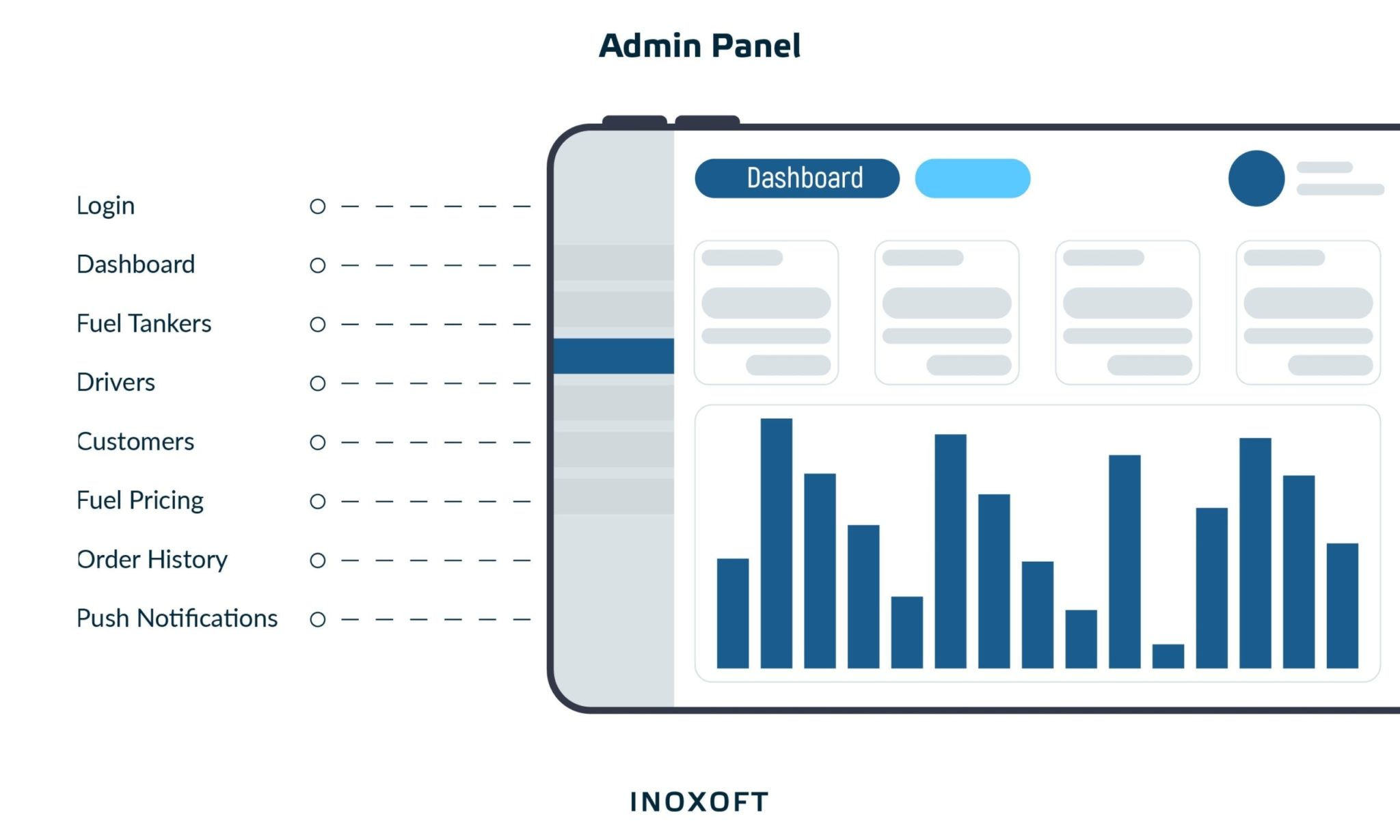
Admin panel

The admin panel provides essential tools for managing the entire fuel delivery system. Key features include:

  • User and vendor management. Admins can approve or reject vendors after reviewing their documents.
  • Fuel tanker and resource management. Admins can oversee fuel tankers, prices, and other resources.
  • Driver monitoring. Admins can track drivers’ locations and manage interactions with customers.
  • Reports and analytics. Access to detailed reports and performance analytics to track delivery efficiency and overall service quality.
  • Service performance optimization. Admins can use data insights to make informed decisions for improving the app and company operations.

Admin Panel of Fuel Delivery App

The table below provides an approximate breakdown of the development hours and budget for each feature, helping you better understand the investment needed to build a fully functional fuel delivery app solution:

Feature

Estimated Development Hours

Approximate Cost (USD)

Customer Panel

Personal profile creation

40

1,000

Location selection and search

60

1,500

Order placement and confirmation

80

2,000

Price calculation based on fuel type and quantity

40

1,000

Secure payment options (card, cash)

60

1,500

Real-time tracking with estimated arrival time

100

2,500

Push notifications for order updates

40

1,000

Order history and support features

60

1,500

Driver Panel

Registration and document upload

40

1,000

Availability status management

30

800

Dashboard for managing orders

80

2,000

Real-time request management (accept, reject, track)

120

3,000

Access to user information and contact details

40

1,000

Payment features and optimized route calculation

60

1,500

Support features

30

800

Admin Panel

User and fuel tanker management

80

2,000

Vendor approval and rejection

40

1,000

Driver location monitoring

60

1,500

Customer support management

40

1,000

Reports and analytics

100

2,500

Total

870 hours

30,100 (USD)

Factors Influencing the Cost of Fuel Delivery App

We have already expanded our knowledge of fuel delivery app development pricing. Yet, we still need to overview the things that might significantly modify the total cost. Although we can estimate the approximate sum, there are still plenty of details that even the software development team can’t spot right away. So what are the factors influencing the cost of fuel delivery app development?

Complexity

Programmers are required to write the code from scratch, depending on the number of features. And we know that the more complex the app, the more money you need to allocate. Thus, it would be best to ponder what functionalities you really want to implement and are allowed to, relying on your budget.

  • Third-party integrations. Integrating external services like payment gateways, mapping APIs for location tracking, or customer support systems adds to the development effort. Each integration must be tested for compatibility and security.
  • Backend infrastructure. A robust and scalable backend is essential for handling large volumes of data, real-time updates, and multiple user types (customers, drivers, admins). Complex backends require more coding and testing to ensure seamless functionality.
  • Security requirements. Implementing strong security features like data encryption, secure authentication, and compliance with regulations (e.g., GDPR) adds to the complexity and cost of your mobile fuel delivery app solution.

Platforms

The next uneasy choice is selecting the platform where you’ll build your fuel delivery app. There are three primary options to consider: iOS, Android, and cross-platform development:

  • Native iOS Development. Building a native iOS app means developing it specifically for Apple devices using Swift or Objective-C. 
  • Native Android Development. Similar to iOS, native Android development focuses on building an app tailored for Android devices, using Java or Kotlin. Native Android apps may require more extensive testing because of the variety of devices and screen sizes.
  • Cross-Platform Development. Allows you to build a single codebase that works on both iOS and Android platforms using technologies like React Native or Flutter. Cross-platform apps are generally more cost-effective since you don’t need separate development teams for each platform. However, cross-platform apps may not perform as smoothly as native apps and could require additional testing and optimization to function seamlessly across different devices.

We recommend considering cross-platform development, as these apps are used by people with different operating systems. This way, you won’t have to pay separately for Android or iOS development later on,” comments Nazar Kvartalnyi.

UI/UX design

The fuel delivery app development costs more than intended because of the application’s design. Indeed, if you want a smooth-running app with a trendy design, be ready to pay accordingly. Engaging users to continue using your product is crucial, and the most obvious way is a beautiful interface that guarantees a high-quality experience. Essential screens for a fuel delivery app solution:

  • Splash screen and onboarding. This is the first interaction a user has with the app, setting the tone for the experience. Onboarding screens help guide new users through the app’s features.
  • Home screen and navigation. It’s the main hub where users access key functions such as placing orders, viewing recent activities, and navigating to other sections of the app.
  • Search and filtering functionality. Allows users to search for locations or specific fuel types, with filters to refine results based on their needs.
  • Order placement and confirmation screens. These screens guide users through the process of selecting fuel type, quantity, and location, with a final confirmation step.
  • Payment screen. Secure payment processing options, including card payments or cash on delivery.
  • Tracking Screen. Provides real-time updates on the status of fuel delivery, including estimated arrival times and live location tracking.
  • Profile and settings screen. Allows users to manage personal information, payment methods, and app settings.


Screen

Estimated Design Hours

Approximate Cost (USD)

User Interface (UI)

Splash screen and onboarding

20

600

Home screen and navigation

40

1,000

Search and filtering functionality

30

800

Order placement and confirmation screens

60

1,500

Payment screen

30

800

Tracking screen

40

1000

Profile and settings screen

30

800

User Experience (UX)

User flow and wireframing

60

1,500

Prototyping and usability testing

80

2,000

Iterative design and optimization

60

1,500

Total

390

11,500

Feature list

As discussed in previous paragraphs, you will pay more for a highly complex fuel delivery application than a basic one. Think about how it will pay off and what your target audience would really like to have. The following are essential features that should be included to ensure a functional, user-friendly, and efficient mobile fuel delivery app solution:

  • User registration and login. Users should be able to create accounts easily using email, phone numbers, or social media logins. Secure authentication methods, such as two-factor authentication (2FA), can also be included for added security.
  • Location selection and GPS integration. Real-time GPS integration is critical for enabling users to select their delivery location and allowing drivers to find the user’s exact location efficiently. This feature improves accuracy and convenience.
  • Fuel type selection and quantity. Users should be able to select the type of fuel they need (e.g., gasoline, diesel, etc.) and specify the quantity for delivery. The app should calculate the total price based on these inputs.
  • Order placement and confirmation. A seamless order process is essential, allowing users to place fuel delivery requests with just a few clicks. After the order is placed, the app should confirm the request and display order details for user review.
  • Real-time tracking. Users should be able to track the delivery status in real-time, including the driver’s location, estimated arrival time, and updates on the progress of the delivery.
  • Multiple payment options. Offering secure payment options is key. To give users flexibility and convenience, include credit/debit card payments, digital wallets, or even cash-on-delivery options.
  • Push notifications. Keep users informed with real-time push notifications. These should alert customers about order confirmation, updates, estimated delivery time, and when the driver arrives at the location.
  • Order history. The app should allow users to view past orders, making it easy to reorder the same type of fuel and quantity. This is a useful feature for regular customers.
  • Driver management and availability. Drivers should be able to manage their availability status, track orders in real time, and view customer locations to streamline the delivery process.
  • In-app chat or support. Provide users with a direct line of communication through an in-app chat feature or customer support options. This ensures that any issues with the order or delivery can be resolved quickly.
  • Loyalty programs and discounts. Including a loyalty program where users can earn points or receive discounts for regular use will increase customer retention. Offering promotional deals or subscriptions is another way to engage users.
  • Reports and analytics for admins. The admin panel should include access to detailed reports and analytics that track delivery performance, customer satisfaction, and service efficiency. This will help in making data-driven decisions to improve the app and service.

By incorporating these features, your fuel delivery app will be well-equipped to meet the needs of your customers while providing a seamless and efficient service.

Location of a development company

If you have ever been interested in outsourcing, you know the differences in development services costs based on the company’s location. Development rates in different regions vary due to factors like labor costs, experience, and market demand. For example, the total sum of development services in Asian or African countries will significantly differ from European countries or the US. However, it’s important to weigh the trade-offs, such as time zone differences, communication challenges, and overall expertise.


Region

Estimated Hourly Rate of Development (USD)

Eastern Europe

$30 – $40

Asia

$20 – $30

Latin America

$40 – $60

Africa

$20 – $40


Technology stack

With your software development team, you should choose the best tech stack to influence app efficiency, engagement, and overall user experience positively. Here we have the same logic: more complex technology – and more financial expenses to integrate it.

Here’s a breakdown of the key technologies that can be used for different parts of the application:

Frontend:

  • React Native. A popular cross-platform framework for building apps that work on both iOS and Android. It offers a near-native user experience and allows for faster development with a single codebase.
  • Flutter. Another cross-platform option developed by Google. It offers high performance and beautiful UIs. Like React Native, it allows you to build apps for both iOS and Android from a single codebase.
  • Swift (iOS). The go-to language for native iOS app development. Ideal if you want to focus specifically on Apple’s ecosystem, offering full integration with iOS features.
  • Kotlin (Android). A modern language for building native Android apps. It’s fully supported by Google and offers powerful, concise coding for Android development.

Backend:

  • Node.js. A JavaScript runtime environment is ideal for building fast, scalable backend services. It’s particularly useful for real-time features like order tracking and notifications.
  • Python (Django or Flask). Python programming language is known for its simplicity and power. Django is a full-fledged framework for developing secure and scalable web apps, while Flask is a lightweight alternative that offers flexibility for smaller, more focused projects.

Database:

  • PostgreSQL. A powerful open-source relational database. It’s ideal for handling complex queries and large datasets, making it a great choice for scalable apps.
  • MongoDB. A NoSQL database that is well-suited for apps requiring high flexibility, such as those dealing with large amounts of unstructured data like user orders and transactions.

Mapping and Navigation:

  • Google Maps API. A widely used solution for real-time location tracking, routing, and distance calculation. Essential for providing location-based services within your app.
  • Apple Maps. A great alternative for iOS apps that integrates seamlessly with the Apple ecosystem.

Payment Gateway:

  • Stripe. A widely adopted payment gateway that allows for secure card payments, subscription management, and fraud detection. Stripe offers easy integration and a seamless user experience.
  • PayPal. Another trusted payment processor that supports various payment options, including credit cards and PayPal balances. It’s particularly useful for offering a variety of payment methods to customers.

Cloud Platform:

  • AWS (Amazon Web Services). A highly scalable and reliable cloud service provider offering tools like EC2 for hosting, S3 for storage, and RDS for databases. It’s a popular choice for building high-availability apps.
  • GCP (Google Cloud Platform). Google’s cloud service offers similar services to AWS and is great for apps that require strong integration with Google’s suite of services.

Additional Technologies:

  • Firebase. Offers real-time data sync capabilities, user authentication, cloud messaging, and hosting, making it a solid choice for apps that need real-time updates and push notifications.
  • Twilio. A communications API that allows for SMS, voice, and video messaging. It’s perfect for sending order updates or delivery confirmations via SMS or call notifications.


Technology

Purpose

Complexity

Frontend

React Native or Flutter

Cross-platform development

Medium

Swift or Kotlin

Native development for iOS or Android

High

Backend

Node.js

Scalable and efficient server-side development

Medium

Python (Django or Flask)

Robust and versatile backend framework

Medium

Database

PostgreSQL

Relational database for storing user data, orders, and other information

Medium

MongoDB

NoSQL database for flexible data storage and retrieval

Medium

Mapping and Navigation

Google Maps API

Real-time maps, directions, and location-based services

High

Apple Maps

Native mapping capabilities for iOS devices

Low

Payment Gateway

Stripe

Secure and flexible payment processing

Medium

PayPal

Popular payment gateway with global reach

Medium

Cloud Platform

AWS (Amazon Web Services)

Scalable cloud infrastructure

High

GCP (Google Cloud Platform)

Scalable cloud infrastructure

High

Additional Technologies

Firebase

Real-time database, authentication, and cloud messaging

Medium

Twilio

SMS and voice communication services

Medium

Maintenance

Naturally, fuel delivery application development costs more when we mention app maintenance. You’ll be able to make sure everything works as you want it to and be ready to solve the problems. At this point, upgrades and new additions are a must to keep up with the competitors. So this price is more than just reasonable.

Below are the key elements of app maintenance and their approximate monthly costs:

  • Bug fixes and patches. Regularly identifying and fixing bugs is essential for ensuring a smooth user experience. Minor bugs may be resolved through patches, while larger issues might require more in-depth work.
  • Performance optimization. As user demand grows, app performance may slow down. Routine optimization, such as improving loading times, handling large user volumes, and ensuring seamless functionality, is necessary to keep the app running efficiently.
  • Feature updates and enhancements. Over time, you may want to introduce new features or enhance existing ones to improve the user experience and stay competitive in the market. This could include adding new payment options, expanding real-time tracking, or introducing loyalty programs.
  • Security updates. Keeping the app secure is a top priority, especially when handling sensitive user data like payment information. Regular security audits and updates will help protect your app from vulnerabilities and potential threats.
  • Technical support and customer inquiries. Providing ongoing technical support for users ensures that any issues they encounter are resolved quickly. This could involve troubleshooting, responding to customer inquiries, and managing complaints or feedback.


Maintenance Aspect

Estimated Monthly Cost (USD)

Bug Fixes and Patches

$500 – $1,000

Performance Optimization

$800 – $1,500

Feature Updates and Enhancements

$1,000 – $2,000

Security Updates

$500 – $1,500

Technical Support and Customer Inquiries

$700 – $1,200


“Make sure to account for maintenance costs, or you could end up losing profit. Imagine it’s peak order time, and your payment gateway goes down. Not only do you lose revenue, but you also risk losing customer loyalty,” advises our COO. 

Popular Fuel Delivery Apps

Knowing the cost of developing a fuel delivery app and must-have features is not enough to start the development process. To create an innovative and qualitative product, you inevitably need to investigate the market and determine its competition’s mood. Take a look at some of the most popular fuel delivery applications that might inspire you get started the hard work:

Yoshi

Established in 2015, a USA-based fuel delivery startup provides fuel delivery services across the whole country. Yoshi also delivers car maintenance services, including car washing, engine cleaning, oil changes, tire check, etc. Customers can schedule their services, have 30 days of free service, and accept membership that ensures special offers.

Yoshi

Fuel Buddy

Being an Indian delivery company, Fuel Buddy provides gas to different locations within the country, including Mumbai, Chennai, Kolkata, and New Delhi. This provider’s intelligent delivery tracking system allows in-depth reports and analysis. In addition to fuel delivery, Fuel Buddy offers customers the service of tracking their fuel intake by providing smart gas monitors and dispensing containers.

Fuel Buddy

Booster Fuel

Booster Fuel is another US-based firm that provides on-demand gas refills to American citizens wherever they are: even when they are not present near the vehicle. This on-demand mobile fuel delivery has gasoline and diesel fuels and renewable fuel types in its arsenal, such as ethanol, biodiesel, hydrogen, synthetic blends and electricity.

Booster Fuel

Cafu

Cafu is one of the most successful on-demand fuel delivery startups that UAE has ever seen. The company delivers petrol to cars, motorcycles, boats and other vehicles in Dubai, Sharjah, and Ajman. For payment options, Cafu has either a single-time payment per fill-up or a subscription model with regular gas refills and oil and tire changes for monthly payment.

Cafu

Strategies to Decrease the Cost of Your Fuel Delivery App Development

If you’re looking to reduce the cost of your fuel delivery app, consider the following strategies:

  • Focus on essential features. Start by developing only the core features your users will need. Avoid unnecessary complexities in the initial stages, and add advanced features later as your app gains traction.
  • Use ready-made integrations. Instead of building custom solutions for every feature, leverage existing third-party integrations for payment gateways (like Stripe or PayPal), location services (Google Maps API), and push notifications (Firebase). This saves both time and money.
  • Opt for agile development. Agile development enables you to build and release your app incrementally, delivering functional versions quickly. This approach accelerates time to market and allows for ongoing improvements based on user feedback. It helps you better manage costs by prioritizing essential features and iterating efficiently.
  • Optimize resource allocation. Carefully plan your development team and resources. Consider outsourcing certain tasks to regions with lower hourly rates, or use a smaller, highly skilled team to deliver high-quality results without unnecessary overhead costs.

Outsource Your Fuel Delivery App Development to the Inoxoft Team

If you are looking for a development team that can help bring your idea to life, you’ve come to the right place. Under our belt, there are 200 projects and experiences in domains like logistics and fuel delivery applications. With over 8 years of experience, we bring valuable insights to every project we undertake.

You can outsource the development if you need to create an app from scratch. Besides, we can strengthen your team with dedicated specialists, carefully selected to meet the goals of your project. 

Want to discuss your needs? Contact us.

How We Developed the Fuel Delivery App for the US Market

We worked with a visionary entrepreneur based in the USA who wanted to revolutionize home fuel distribution. The goal was to create a seamless and affordable way to order essential home fuels while ensuring compliance with American legal standards.

To bring this vision to life, we developed a comprehensive solution that allows users to register as either buyers or sellers. Buyers can easily create orders by specifying the type of fuel they need, the delivery radius, and their preferred timeframe. These orders are then sent out to a network of pre-approved sellers, who respond with bids. Buyers can choose the best option based on price, ratings, and delivery time.

For sellers, the process is equally straightforward. After passing a background check and meeting state regulations, they can use the app to bid on orders, set prices, and manage deliveries in real-time.

We also integrated secure payment systems like Google Pay, Apple Pay, Visa, Mastercard, and Stripe, ensuring that payments are processed only once deliveries are confirmed. To maintain regulatory compliance, we implemented an admin panel that allows administrators to manage users, check documents, and oversee operations.

Conclusion

The cost of developing a fuel delivery app solution can vary significantly based on the features, platform, and complexity. On average, a basic fuel delivery app could cost anywhere from $40,000 to $80,000, while a more advanced solution can range from $130,000 to $200,000 or more. 

At Inoxoft, we specialize in developing custom logistics and fuel delivery applications that meet both regulatory standards and user expectations. With over 8 years of experience and a track record of successful projects, our team can help you build a scalable and efficient solution tailored to your business. Whether you need project outsourcing or team augmentation, Inoxoft will provide a suitable collaboration model to ensure a smooth development process.

Ready to bring your fuel delivery app to life? Contact us today to discuss your project!

Frequently Asked Questions

Ask manager more questions

Can I develop a fuel delivery app myself?

It’s possible to develop a fuel delivery app yourself, but it requires significant technical expertise. Building a fully functional app requires skills in various areas like UI/UX design, real-time tracking, secure payment gateways, and compliance with industry regulations. You’ll also need experience with APIs, server infrastructure, and app security.  

For most businesses, partnering with a skilled software development company like Inoxoft ensures that you build a scalable, secure, and compliant solution that meets industry standards and customer expectations. Outsourcing can also reduce time to market and ensure continuous support post-launch.

What are the potential revenue streams for a fuel delivery app?

A fuel delivery app can generate revenue through various channels. One common model is charging service fees for each fuel delivery, either as a flat rate or a percentage of the order total. Subscription models are another potential stream, offering regular customers discounted or prioritized deliveries for a monthly or annual fee. 

You can also introduce premium features such as faster delivery times, personalized fuel options, or dedicated customer support for a higher cost. Partnerships with fuel providers can open new streams by charging vendors a fee to use your platform. Additional revenue could come from loyalty programs, referral bonuses, advertising, or offering related services like vehicle maintenance.

How can I differentiate my fuel delivery app from competitors?

Start by enhancing the user experience with faster delivery times and a broader range of fuel options tailored to customer preferences. Real-time tracking with precise updates and notifications can set your app apart. You can also integrate flexible and secure payment options, like Stripe, Google Pay, or Apple Pay.

Offering loyalty programs, exclusive discounts, and rewards for repeat customers can build strong customer retention. Additionally, ensure full compliance with local regulations and provide exceptional customer support to establish trust and reliability, key factors in gaining a competitive edge.