















A user profile page is more than a place to display a name and photo. It connects identity, account management, personalization, privacy, security, and product engagement. When these responsibilities are mixed into one cluttered screen, users may struggle to understand what is public, what can be edited, and how their information is used.
Accessibility must also be considered from the beginning. The WebAIM Million 2025 report found detectable WCAG failures on 94.8% of the one million home pages analyzed. Missing form labels, low-contrast text, empty buttons, and inaccessible images were among the most common problems. Profile pages often contain all these interface elements, which makes accessibility testing especially important.
Effective user profile page design should help people:
- understand how they appear to others;
- update personal information without confusion;
- control privacy and communication preferences;
- review activity, progress, or account history;
- manage authentication and connected devices;
- complete the product-specific tasks associated with their role.
This guide explains how to design user profiles for web and mobile products, which components to include, how to address security and privacy, and what different industries can learn from common profile patterns.








- TL;DR
- What Is a User Profile Page?
- Why User Profile UX Matters
- User Profile Page Design for Mobile and Desktop
- 12 Best Practices for User Profile Page Design
- Essential User Profile Components
- User Profile Page Examples by Product Type
- Technical Considerations Behind Profile Design
- Common User Profile Design Mistakes
- Using AI in Profile Design and Development
- How Inoxoft Designs and Builds User-Centered Products
- Final Thoughts
TL;DR
- Separate the public profile, private personal data, account settings, and security controls.
- Ask only for information that supports a clear user or business need.
- Use progressive profiling instead of requiring users to complete long forms during registration.
- Make profile forms accessible, responsive, and easy to use with a keyboard or assistive technology.
- Show clear save states, validation messages, visibility labels, and error recovery options.
- Treat security and privacy as part of the profile experience, not as backend-only concerns.
- Adapt the profile structure to the product. A marketplace seller, patient, student, and SaaS administrator need different information.
- Test profile flows with real users and track task completion, abandonment, support requests, and profile completeness.
- AI-assisted design and development can accelerate routine work, but senior specialists should still validate accessibility, data handling, architecture, and business logic.
What Is a User Profile Page?
A user profile page is an interface where information associated with a particular account is displayed or managed. Depending on the product, a profile may be private, visible to selected people, or publicly accessible.
A profile page should not automatically be treated as an account settings page. In a mature product, these areas often have different purposes.
A public profile shows how a user appears to others. It may include a display name, avatar, biography, work, posts, or ratings.
The personal information section stores private identity details, such as a legal name, date of birth, address, or phone number.
Preferences let users customize their experience through language, time zone, content interests, and notification settings.
The security section protects account access. It may include password and passkey management, multi-factor authentication, active sessions, and recovery options.
Billing covers plans, invoices, and payment methods.
Privacy controls determine how information is used and who can see it. They may include consent settings, profile visibility, blocked users, and data export.
The activity section helps users review their history, including orders, lessons, applications, saved items, and recent actions.
Keeping these functions distinct makes the interface easier to understand and reduces the risk of exposing private data unintentionally.
Why User Profile UX Matters
User profiles support several product and business functions.
Personalization
Profile information can help a system adapt recommendations, notifications, language, permissions, and content. However, collecting more information does not automatically produce better personalization. Each field should have a defined purpose, a lawful basis for processing where required, and a clear effect on the experience.
Trust
Users need to know who can view their data, why particular information is requested, and how they can change or delete it. A profile that clearly distinguishes public and private fields creates more confidence than one that hides these details in a lengthy privacy policy.
Task efficiency
A student may use a profile to continue a course. A marketplace provider may update qualifications and availability. A patient may review personal details before an appointment. The profile should prioritize these recurring tasks rather than function as a static biography.
Account security
Profiles are closely connected to identity, authentication, permissions, and account recovery. Security controls must therefore be understandable and accessible, not buried behind ambiguous icons or unfamiliar terminology.
Product insight
Aggregated profile and behavioral data can inform product decisions, but analytics should be implemented with appropriate consent, retention, access, and anonymization controls. Teams should not collect personal data simply because it may be useful later.
User Profile Page Design for Mobile and Desktop
A profile should use the same underlying information architecture across devices, but the presentation and interaction model may change.
Navigation on mobile may use compact tabs, accordions, or separate screens. Desktop layouts can accommodate sidebar navigation or multiple columns, provided the relationships between sections remain clear.
Input methods should reflect the device. Mobile forms benefit from touch controls, appropriate keyboards, and camera access where relevant. Desktop interfaces can support keyboard input, drag-and-drop, and wider forms.
Layout on mobile should generally prioritize a single column and the most important actions. Desktop layouts can display several related sections together without forcing users to navigate between screens.
Action placement should support the interaction context. Frequently used mobile actions should be easy to reach, while desktop actions should appear near the content they affect.
Information density can also differ. Mobile screens should present essential information first. Desktop screens may keep more supporting details visible, as long as this does not weaken the hierarchy.
Editing patterns may use focused screens or bottom sheets on mobile. Desktop users may benefit from inline editing or structured forms.
Testing should cover different mobile screen sizes, orientations, and network conditions. Desktop testing should include keyboard navigation, zoom, and varied viewport sizes.
Responsive design should not mean shrinking the desktop page. The team should decide which information users need in each context and how to preserve the same functionality without creating unnecessary complexity.
For broader product planning, see Inoxoft’s guide to the application development life cycle.
12 Best Practices for User Profile Page Design
1. Start With User Roles and Tasks
Before choosing components, identify:
-
Who owns the profile.
-
Who can view it.
-
Which information each audience needs.
-
Which actions the profile should support.
-
Which fields are required, optional, or prohibited.
-
How the profile changes during the user lifecycle.
A recruitment platform may have candidate, recruiter, employer, and administrator profiles. Their permissions and priorities are different, so forcing all roles into one template usually creates confusion.
Create a role and permission matrix before producing high-fidelity screens. This also helps designers, developers, and security specialists identify sensitive data and authorization requirements.
2. Separate Public and Private Information
A user should never have to guess whether a phone number, location, date of birth, or activity status is visible to other people.
Use clear labels such as:
-
Public.
-
Visible to connections.
-
Visible to organization administrators.
-
Private.
-
Used only for account recovery.
If visibility can be changed, display the control next to the relevant information. A separate “View profile as” function can help users understand how their profile appears to other roles.
The backend must enforce the same visibility rules. Hiding a field in the interface is not a substitute for API authorization.
3. Use Progressive Profiling
Request the minimum information necessary to create an account and complete the first meaningful action. Ask for additional details when they become relevant.
For example, a services marketplace may initially require only an email address, display name, and authentication method. Professional experience, portfolio items, rates, and availability can be requested when the user starts creating a provider profile.
Progressive profiling can:
-
Shorten onboarding.
-
Reduce unnecessary data collection.
-
Make the purpose of each field easier to explain.
-
Let users experience product value before completing a detailed profile.
Avoid using a completeness score to pressure users into sharing optional personal information. Explain how each additional field improves the experience.
4. Build a Clear Visual Hierarchy
The page should answer three questions quickly:
-
Whose profile is this?
-
What is the most important information?
-
What can the user do next?
Place identity information, status, and primary actions near the beginning of the page. Group secondary information into clearly named sections instead of creating one continuous form.
Use headings, spacing, typography, and containers consistently. Do not rely on color alone to communicate status, validation, or privacy.
5. Make Editing Predictable
Users should be able to recognize which information is editable and what happens after a change.
Useful patterns include:
-
A clear “Edit profile” action.
-
Section-level editing for complex profiles.
-
Inline editing for short, independent fields.
-
Explicit Save and Cancel actions.
-
Autosave only when its status is clearly communicated.
-
Confirmation for sensitive changes.
-
A warning before leaving with unsaved changes.
After saving, show a specific confirmation such as “Contact information updated.” Avoid vague notifications like “Success.”
Sensitive changes, including an email address, phone number, password, or payment information, may require reauthentication or verification.
6. Design Accessible Forms and Controls
Accessibility is essential because profile pages rely heavily on forms, controls, status messages, images, and authentication flows.
Follow the Web Content Accessibility Guidelines and test the interface with a keyboard and screen reader. In particular:
-
Associate every input with a visible label.
-
Provide instructions before users encounter an error.
-
Connect error messages programmatically to their fields.
-
Keep keyboard focus visible.
-
Preserve a logical focus order.
-
Use sufficient color contrast.
-
Provide meaningful alternative text for informative images.
-
Allow users to zoom without losing content or functionality.
-
Make controls large enough for touch interaction.
-
Avoid authentication tasks that depend only on memory or puzzle solving.
WCAG 2.2 includes a minimum target size criterion of at least 24 by 24 CSS pixels in most situations. The W3C target size guidance explains the exceptions and spacing requirements.
Accessible authentication is also addressed in the W3C guidance for WCAG 2.2. Password managers and copy-and-paste functionality should not be blocked.
7. Design for Privacy by Default
Privacy controls should be part of the profile architecture from the discovery stage.
Good practices include:
-
Collecting only necessary personal data.
-
Making optional fields genuinely optional.
-
Choosing privacy-preserving default visibility.
-
Explaining why sensitive data is requested.
-
Separating essential processing from optional consent.
-
Allowing users to withdraw optional consent.
-
Providing data export and account deletion flows where applicable.
-
Defining retention periods.
-
Limiting employee and system access to personal information.
The UK Information Commissioner’s Office recommends incorporating data protection by design and by default throughout the lifecycle of systems that process personal data.
Privacy requirements vary by jurisdiction and product type, so legal and security specialists should review the final implementation.
8. Integrate Security Into the UX
Security controls should be easy for legitimate users to understand and difficult for unauthorized people to bypass.
A security section may include:
-
Password or passkey management.
-
Multi-factor authentication.
-
Verified email addresses and phone numbers.
-
Account recovery methods.
-
Active devices and sessions.
-
Recent security events.
-
Third-party account connections.
-
Sign-out from other devices.
-
Account deactivation or deletion.
Use reauthentication for high-risk actions. Notify users about significant changes, but do not include sensitive information in notifications.
The NIST Digital Identity Guidelines and the OWASP Digital Identity guidance provide useful foundations for identity, authentication, and account security decisions.
Security also depends on architecture. Profile APIs must validate authorization on every request, protect sensitive fields, and record appropriate security events. Learn more about these relationships in our guide to web application architecture.
9. Support All Profile States
Designers often create only an ideal, completed profile. Real products also need:
-
A new or empty profile.
-
A partially completed profile.
-
A profile awaiting verification.
-
A private or restricted profile.
-
A suspended account.
-
A deleted or deactivated account.
-
Unavailable data.
-
An upload or save failure.
-
An offline or slow-network state.
-
A profile owned by a blocked user.
Each state should explain what happened and what the user can do next. Empty states should provide context and a relevant action, not just display a blank container.
10. Handle Images and User-Generated Content Safely
Avatar and cover image flows should define:
-
Supported formats and file sizes.
-
Crop and preview behavior.
-
Compression and responsive versions.
-
Fallback initials or default images.
-
Moderation rules.
-
Removal and replacement.
-
Error recovery.
-
Storage and access policies.
Do not require a real photo unless the product has a legitimate need for one. Some users may prefer an illustration, logo, initials, or no image.
Biography fields, usernames, links, and portfolio content also require validation, output encoding, abuse reporting, and moderation rules.
11. Prepare for Localization and Inclusive Identity
Names, addresses, phone numbers, and dates do not follow one universal format. Avoid assumptions such as:
-
Every person has a first and last name.
-
Every address uses the same order.
-
Names contain only Latin characters.
-
Usernames and legal names are interchangeable.
-
Gender information is always required.
-
Every language fits within the same interface width.
Store structured information only where the business process requires it. Let users control their display name separately from legal or billing information.
Test translated interfaces for text expansion, right-to-left layouts, local date formats, and screen-reader pronunciation.
12. Measure Profile Performance
A visually attractive profile is not automatically effective. Combine analytics with usability testing and support data.
Profile completion rate can help reveal whether the requested information feels relevant and manageable. Interpret it alongside the purpose of the fields rather than assuming every user should complete everything.
Time to complete a key task helps assess whether navigation and forms support efficient interaction.
Form abandonment can identify stages where users encounter friction or decide that the requested information is unnecessary.
Validation error rate helps reveal unclear fields, instructions, or formatting requirements.
Successful save rate shows whether technical errors interrupt editing and prevent users from completing changes.
Privacy setting usage can help assess whether visibility and data controls are discoverable and understandable.
Security feature adoption can indicate whether users can find and configure account protection.
Support requests reveal recurring confusion around profile tasks, account changes, or access.
Accessibility test results help identify barriers encountered by users with disabilities.
Profile completeness should not be treated as the only success metric. A short profile that helps the user finish a task may be more effective than a fully populated profile with unnecessary data.
Essential User Profile Components
The correct component set depends on the product, but a profile may include the following elements.
Identity
-
Display name.
-
Avatar or organization logo.
-
Username.
-
Role or account type.
-
Verification status.
-
Short biography.
Contact and Personal Information
-
Email address.
-
Phone number.
-
Location.
-
Preferred language.
-
Time zone.
-
Other product-specific details.
Sensitive information should be displayed only when necessary and appropriately masked.
Product-Specific Information
-
Skills and work experience.
-
Courses and learning progress.
-
Health or fitness information.
-
Orders and saved items.
-
Membership details.
-
Ratings and reviews.
-
Portfolio content.
-
Licenses or certifications.
Actions
-
Edit profile.
-
Message or contact.
-
Follow or connect.
-
Book or purchase.
-
Share.
-
Report or block.
-
Download data.
-
Deactivate or delete the account.
Do not add actions simply because they are common on social media. Every action should support a defined use case.
User Profile Page Examples by Product Type
Social Networking Profile
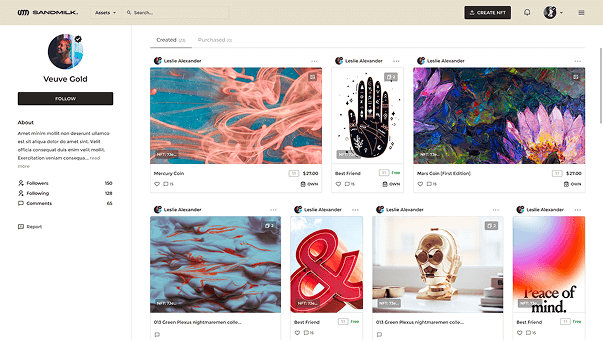
A social profile usually emphasizes identity, content, relationships, and interaction. It may include an avatar, display name, biography, posts, interests, followers, and message controls.
Important design considerations include:
-
Audience and visibility controls.
-
Abuse reporting and blocking.
-
Content moderation.
-
Relationship states.
-
Notification preferences.
-
Protection against impersonation.
Inoxoft applied social networking and personalized experience patterns while building a Vedic astrology-based social networking application. The product combines personalized content with social and lifestyle functionality, demonstrating why profiles must connect product data with clear user-facing experiences.
Services Marketplace Profile
A marketplace profile helps one side of the marketplace evaluate another. It may include:
-
Professional experience.
-
Portfolio items.
-
Rates and availability.
-
Ratings and reviews.
-
Identity or qualification verification.
-
Response time.
-
Booking or contact actions.
Marketplace designers must distinguish user-provided claims, platform-verified information, and customer reviews. This prevents the visual design from implying a level of verification that the platform has not completed.
SaaS Workspace Profile
A business SaaS profile often focuses less on public identity and more on access and productivity. It may include:
-
Role and permissions.
-
Organization and team.
-
Workspace preferences.
-
Integrations.
-
Notification settings.
-
Security and session controls.
Do not let the interface imply that users can modify permissions they do not have authority to change. Clearly separate personal settings from administrator-managed settings.
E-Commerce Profile
An e-commerce profile commonly acts as an account hub containing:
-
Order history.
-
Saved addresses.
-
Payment methods.
-
Wish lists.
-
Returns.
-
Loyalty information.
-
Communication preferences.
Mask sensitive payment data, identify default addresses clearly, and provide confirmation before deleting information that may affect existing orders or subscriptions.
Learning Management System Profile
An LMS profile may combine identity, enrollment, progress, certificates, deadlines, and communication preferences. Teachers and administrators may require different dashboards from learners.
For a broader product checklist, review the essential learning management system requirements.
Healthcare Profile
Healthcare and medical profiles require careful treatment of sensitive data, permissions, terminology, and error prevention. Information may include personal details, appointments, care plans, device data, or access for authorized caregivers.
Design teams should involve healthcare specialists, privacy professionals, and representative users. Our article on creating more user-friendly medical device interfaces discusses usability considerations for safety-sensitive products.
Property and Amenity Management Profile
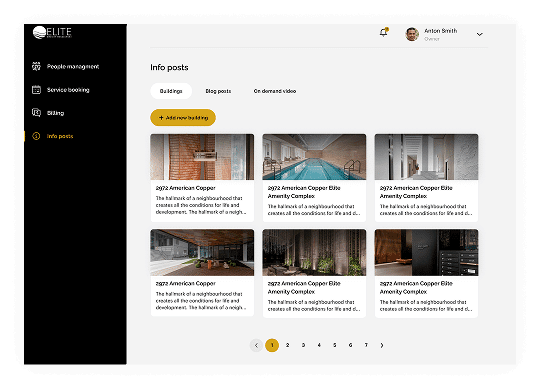
A resident profile may connect personal details with bookings, building access, concierge requests, payments, and notifications. Staff and property administrators need different permissions and workflows.
Inoxoft’s amenity management platform case study shows how web and mobile interfaces can support on-demand services, resident interactions, and operational workflows within one product ecosystem.
Technical Considerations Behind Profile Design
Profile UX cannot be separated from technical implementation.
Data Model
Define which system owns each field and whether it is:
-
Required or optional.
-
Editable or read-only.
-
Public or private.
-
Verified or unverified.
-
User-generated or system-generated.
-
Retained after account deactivation.
-
Synchronized with another service.
A single overloaded user table may become difficult to maintain. Complex products often separate authentication identity, personal data, public profile data, preferences, roles, and audit records.
API Design
Profile APIs should:
-
Return only fields the requesting user is authorized to view.
-
Prevent mass assignment of protected fields.
-
Validate content and file uploads.
-
Handle partial updates safely.
-
Support versioning where necessary.
-
Return clear validation errors.
-
Record security-sensitive changes.
-
Protect endpoints with rate limits and authorization checks.
Performance
Do not load an entire account history to render the profile header. Paginate activity, optimize media, cache suitable public data, and load secondary sections when needed.
Skeleton screens may help during short waits, but they should not hide persistent performance problems.
Testing
Profile functionality requires more than visual QA. Test:
-
Role and permission combinations.
-
Keyboard and screen-reader interaction.
-
Responsive layouts.
-
Localization.
-
Validation and error recovery.
-
File uploads.
-
Slow and unstable connections.
-
Concurrent changes.
-
Session expiration.
-
Account deletion and data retention workflows.
-
API authorization.
Automated accessibility checks can identify some issues, but they cannot confirm complete WCAG conformance. Manual testing and evaluation by representative users remain necessary.
Common User Profile Design Mistakes
Avoid these recurring problems:
-
Combining public profile data with private account settings.
-
Requesting too much information during registration.
-
Making optional fields appear mandatory.
-
Hiding save status or validation feedback.
-
Using placeholders instead of labels.
-
Showing sensitive information without masking.
-
Relying on color alone for status.
-
Allowing the UI to hide data that the API still exposes.
-
Using a long single-column form for unrelated settings.
-
Adding profile completeness pressure without user value.
-
Hiding account deletion while making account creation easy.
-
Designing only the completed profile state.
-
Using desktop interactions on touch devices.
-
Copying a social media profile pattern into an unrelated product.
Using AI in Profile Design and Development
AI-assisted tools can help teams accelerate parts of the design and implementation process. They may support:
-
Synthesis of anonymized research notes.
-
Production of early interface variants.
-
Generation of placeholder content.
-
Frontend component scaffolding.
-
Creation of test cases.
-
Identification of inconsistent UI states.
-
Initial accessibility checks.
-
Documentation of design systems.
However, AI output should not be treated as production-ready by default. Generated interfaces may contain inaccessible controls, weak information architecture, inconsistent states, insecure data handling, or fabricated user assumptions.
Senior designers and engineers should validate:
-
Whether the proposed flow solves a real user problem.
-
Whether personal data is necessary.
-
Whether controls meet accessibility requirements.
-
Whether APIs enforce the intended visibility rules.
-
Whether generated code matches the product architecture.
-
Whether analytics and personalization respect user consent.
-
Whether edge cases and permission states are covered.
If an AI-generated or rapidly prototyped interface has accumulated technical and UX issues, Inoxoft’s Vibe Coding Cleanup service can help assess and stabilize the product before further development.
How Inoxoft Designs and Builds User-Centered Products
Inoxoft approaches profile design as part of the complete product experience. Our designers, business analysts, engineers, and QA specialists connect user needs with privacy requirements, permissions, data architecture, and business goals.
Our UI/UX design services can cover research, user flows, information architecture, wireframes, interactive prototypes, design systems, usability testing, and developer handoff.
Depending on the product scope, companies can also work with Inoxoft through:
-
Product Development Services for end-to-end discovery, design, engineering, testing, and product evolution.
-
A Dedicated Development Team for ongoing access to designers, engineers, QA specialists, and other required roles.
-
The One Man Army service for focused product work that can be handled by a senior multidisciplinary specialist.
-
Vibe Coding Cleanup when an existing AI-assisted product needs technical review, UX refinement, testing, and production hardening.
AI tools can help our specialists accelerate research synthesis, prototypes, routine implementation, documentation, and testing. Final product decisions remain under expert supervision, particularly when they affect accessibility, personal data, security, or complex business workflows.
Final Thoughts
The best user profile page is not the one with the largest number of fields or the most visually elaborate layout. It is the one that helps users understand their identity within the product, complete relevant tasks, and control their information.
Start with roles, permissions, and user goals. Separate public data from private settings. Collect only what the product needs. Design accessible controls and clear states. Connect the interface to secure authorization and data-management practices. Then validate the solution through user research, analytics, accessibility testing, and ongoing product feedback.
A profile designed in this way becomes a useful product workspace rather than a static collection of personal details.
Frequently Asked Questions
How can I design user profile pages that encourage customer engagement?
Design user profile pages with clear calls to action, personalized content, and intuitive navigation to encourage customer engagement and interaction.
How do I create a user profile in UX design?
In UX design, you create user profiles by incorporating essential design principles, such as clarity, consistency, simplicity, accessibility, and responsiveness. This makes user information visually appealing and easily accessible.
How can I ensure user profiles are secure and comply with data privacy regulations?
Implement robust security measures, encryption protocols, and transparent data collection practices.
What information on user profiles helps me personalize the customer experience?
Include user preferences, purchase history, and browsing behavior on user profiles. It will help to tailor recommendations and interactions.
What are the benefits of outsourcing UX/UI design and development for my user profiles?
Outsourcing UX/UI design and development for user profiles offers access to specialized expertise, faster project delivery, and cost-effectiveness. It allows businesses to focus on core operations while ensuring high-quality design solutions.
What should a user profile page include?
A user profile should include only the information and actions required for the product’s use cases. Common elements include a display name, avatar, role, biography, preferences, activity, privacy settings, and security controls. Public information, private personal data, and account settings should be clearly separated.
What is the difference between a user profile and an account page?
A user profile usually represents a person or organization within the product and may be visible to other users. An account page manages private information such as authentication, billing, privacy, connected devices, and communication preferences.
How can I make a user profile page accessible?
Use visible form labels, keyboard-accessible controls, sufficient contrast, logical headings, clear focus states, understandable validation, and appropriately sized touch targets. Test the profile with assistive technologies and use WCAG 2.2 as the accessibility baseline.
Should every profile include a photo?
No. A photo should be optional unless the product has a justified need for identity verification. Products can support initials, illustrations, logos, or default avatars. Users should also be able to replace or remove uploaded images.
How much information should be requested during registration?
Ask only for the information required to create the account and complete the first important action. Additional fields can be requested later through progressive profiling when their purpose becomes clear.
How should sensitive profile information be protected?
Restrict access through backend authorization, encrypt appropriate data, mask sensitive values, use secure authentication, support session management, log important account changes, and apply privacy-preserving defaults. Requirements should be reviewed by security and legal specialists.
How do you design profiles for multiple user roles?
Create a role and permission matrix that defines what each role can view, edit, and perform. Design common components where possible, but provide different information hierarchies and actions for users with different responsibilities.
Can AI design and build user profile pages?
AI can accelerate research synthesis, interface exploration, code scaffolding, testing, and documentation. It cannot independently guarantee accessibility, secure authorization, regulatory compliance, or a valid user experience. Senior designers and engineers should review all production decisions.


